The Truth About Music and Sports in Schools: What the Data Really Shows
For decades, schools have treated athletics and music as parallel “enrichment” tracks. But when you examine the financial, cultural, and developmental realities, a very different picture emerges. Both fields demand dedication, discipline, and passion; yet the pathways, accessibility, and long‑term benefits are not equal.
My deep‑dive into national reports, financial data, and cultural research reveals a truth families and school boards must confront.
1. The “Pay‑to‑Play” Barrier in Youth Sports
Reaching elite athletic levels is not just about talent — it’s about money. A lot of it.
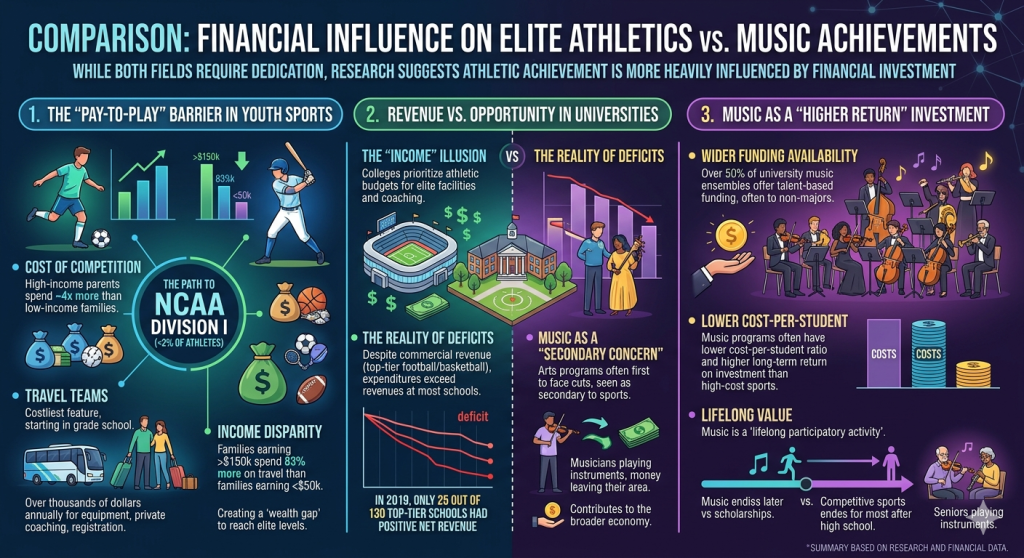
- High-income families spend 4× more on youth sports than low-income families.
- Travel teams, now common even in elementary school, cost thousands annually in fees, equipment, coaching, and travel.
- Families earning over $150,000 spend 83% more on sports travel than families earning under $50,000.
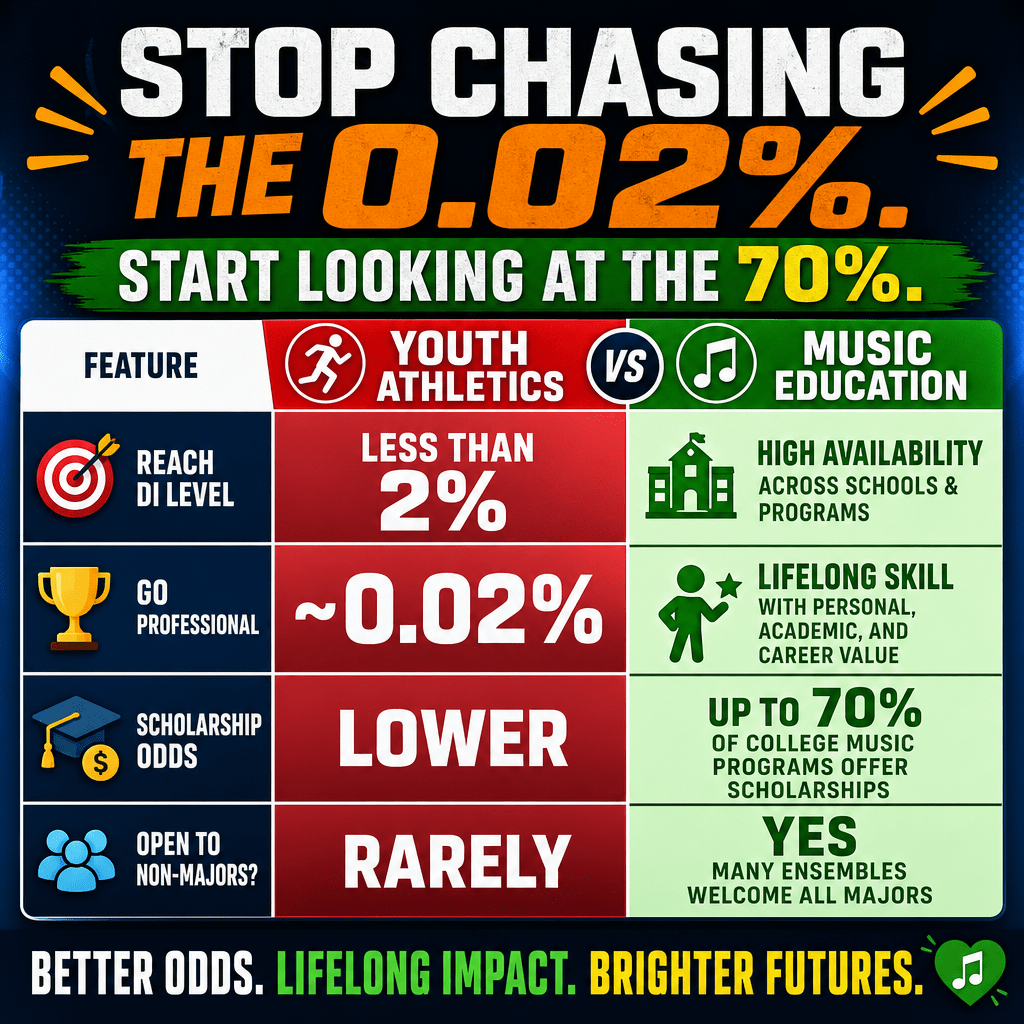
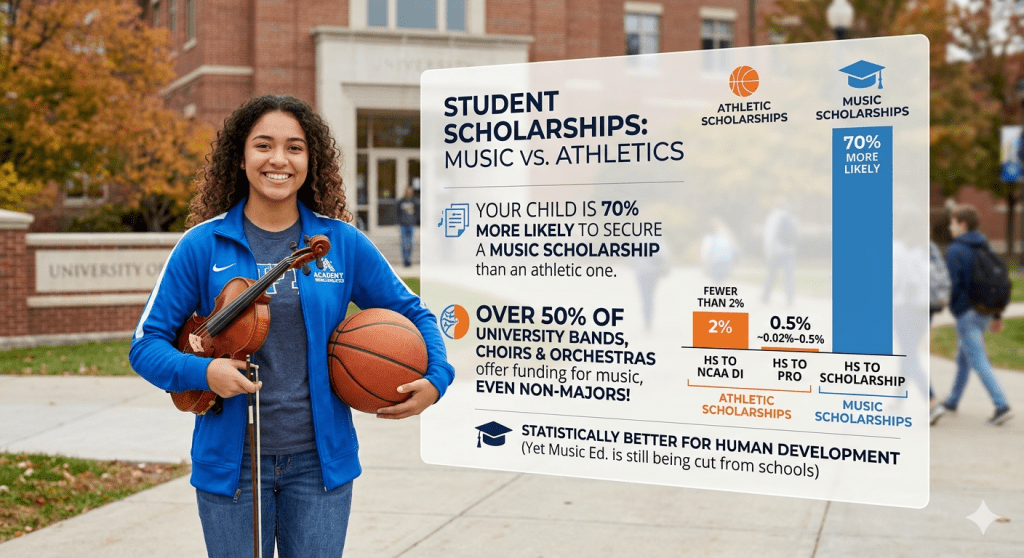
This creates a clear “wealth gate” into competitive athletics. It’s no surprise that fewer than 2% of high school athletes ever reach NCAA Division I, and only 0.02%–0.5% make it to the pros.
Talent matters, but access matters more.
2. The University Funding Illusion: Revenue vs. Reality
Sports are often treated as the financial engine of a university. But the numbers tell a different story.
- Colleges pour money into athletics because sports appear to generate revenue.
- In reality, athletic departments run deficits at the vast majority of schools.
- In 2019, only 25 out of 130 top-tier athletic programs reported positive net revenue.
Meanwhile, arts programs (including music) are often the first to face cuts, despite their proven academic, economic, and cultural value.
Music isn’t a “secondary concern.” It’s a primary contributor to student success and community identity.
3. Music: A Higher-Return, More Accessible Investment
Music education has costs too (instruments, lessons, materials) but the collegiate landscape is dramatically more inclusive.
- Over 50% of university choirs, bands, and orchestras offer talent-based funding.
- Many scholarships are open to non-majors, making music one of the most accessible merit-aid pathways.
- Music programs have a far lower cost-per-student than high-cost sports like football.
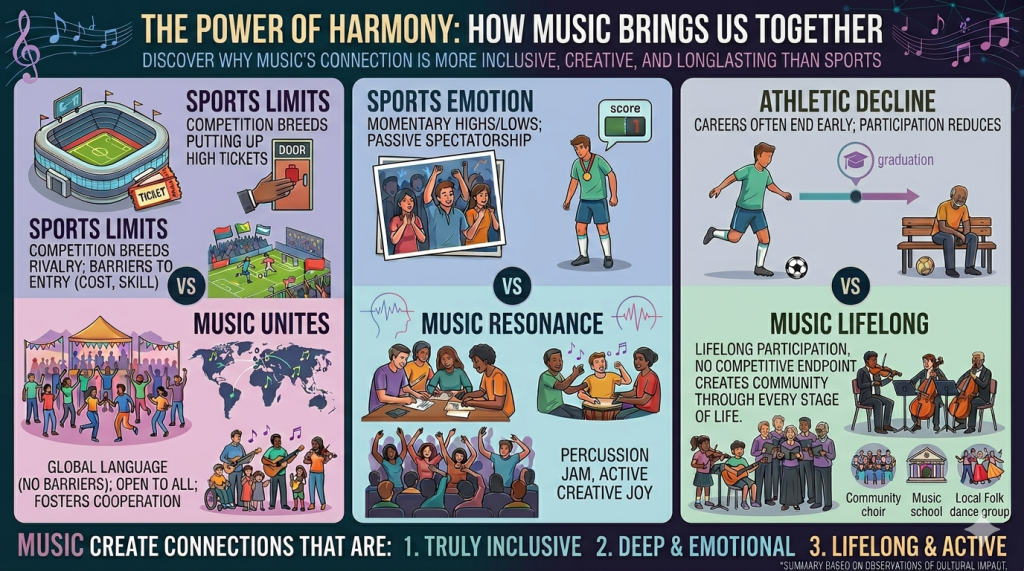
- Music is a lifelong participatory activity, unlike competitive sports, which typically end after high school.
Your child is 70% more likely to receive a music scholarship than an athletic one.
4. The Scale of Opportunity: Music Scholarships in Higher Education
The U.S. has a robust ecosystem of accredited music programs:
- 607+ institutions offer formal music degrees with scholarship opportunities.
- That represents:
- 22.3% of all four-year colleges
- 15.2% of all degree-granting institutions
- 10.3% of all Title IV institutions
In other words, 1 in 5 traditional universities maintains a dedicated, accredited music program with institutional talent scholarships.
Types of Music Aid Available
- Partial and full-tuition awards
- Ensemble participation grants
- Composition and performance scholarships
- Full-tuition models at elite institutions (e.g., Yale School of Music)
Music scholarships are not rare; they are a major, thriving part of higher education.
5. The Human Impact: Why Music Matters More Than Ever
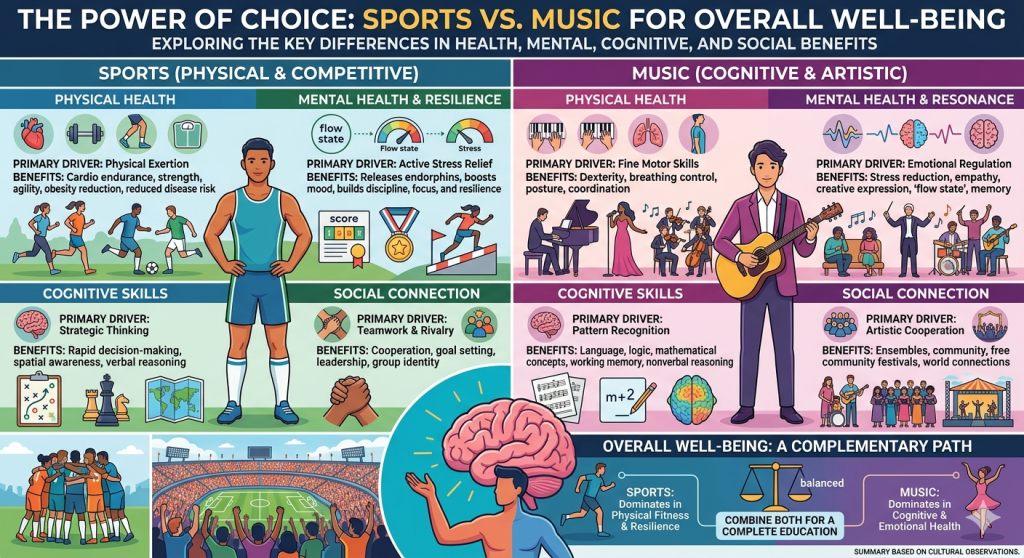
Beyond finances and opportunity, music is one of the most powerful tools we have for human development.
Research consistently shows that music supports:
- Stress reduction
- Emotional regulation
- Cognitive development
- Literacy and language processing
- Support for dyslexia, autism, ADHD, and special needs
- Mental health and resilience
Music strengthens the brain in ways no other discipline can replicate.
Yet despite its proven benefits, music programs continue to be cut from schools.
The Bottom Line
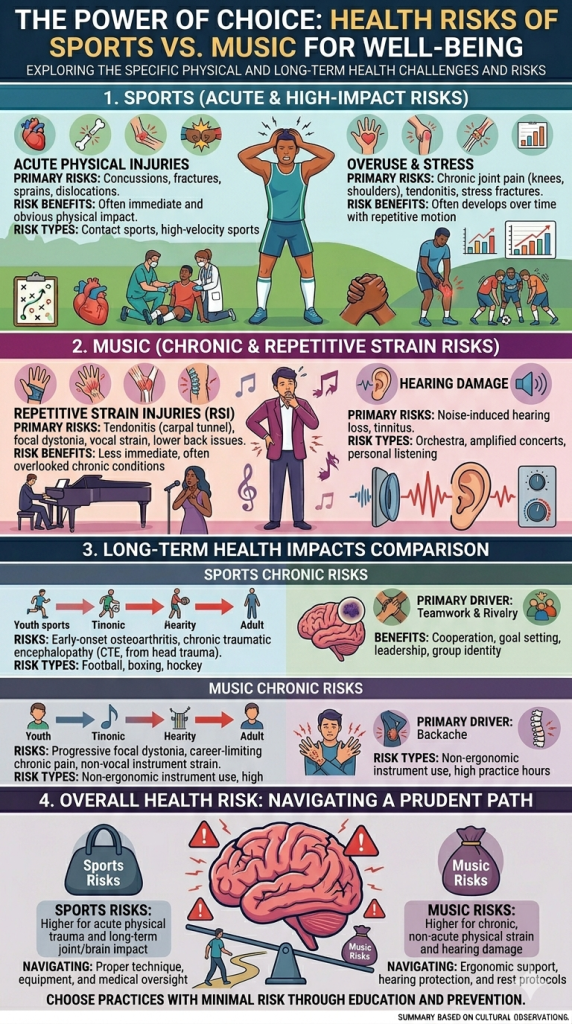
Sports build teamwork, discipline, and school spirit; but the pathway to elite success is narrow, expensive, and statistically unlikely.
Music, on the other hand:
- Offers far more scholarship opportunities
- Provides lifelong value
- Supports mental health and cognitive development
- Is accessible to students across income levels
- Delivers a higher return on investment for families and schools
The ROI on music is too high to ignore.
If we allow music programs to disappear, we are not just cutting an elective, we are cutting one of the most effective, equitable, and scientifically supported tools for human growth.